
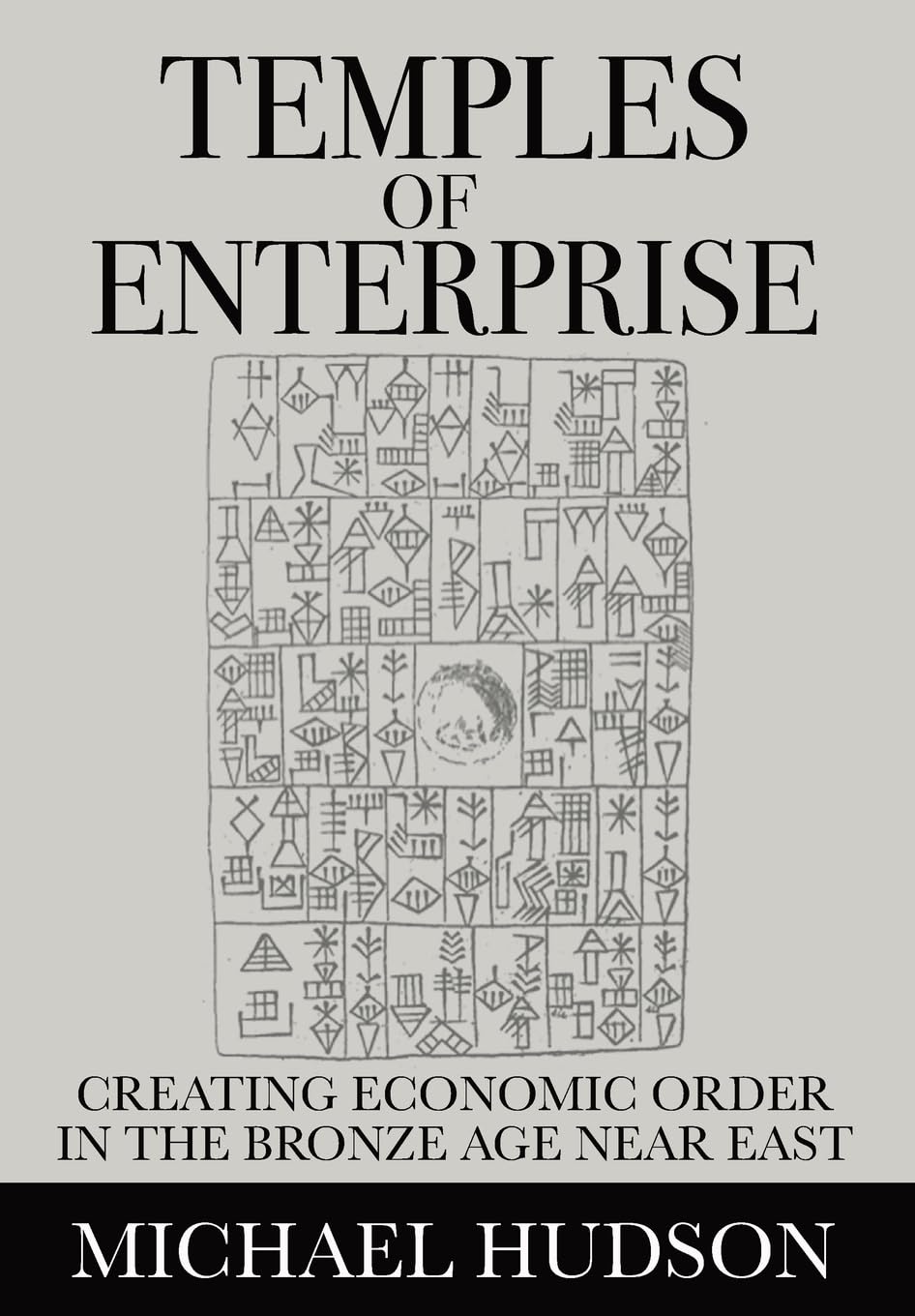
Temples of Enterprise: Creating Economic Order in the Bronze Age Near East
Product details
| Management number | 231940624 | Release Date | 2026/06/18 | List Price | US$10.00 | Model Number | 231940624 | ||
|---|---|---|---|---|---|---|---|---|---|
| Category | |||||||||
The twelve articles collected in this volume describe how the most basic features of Western economic organization - money, markets, land tenure and enterprise - were created in the temples and palaces of the ancient Near East. The perspective on these topics originated in the five international colloquia organized by the Institute for the Study of Long-term Economic Trends (ISLET) with Harvard University's Peabody Museum from 1994 to 2015. When these meetings began, most Assyriology, Egyptology and classical studies tended to accept the views of modern economic orthodoxy. Archaic social values were so different from today's views that there was resistance to recognizing the extent to which the Bronze Age economic takeoff, 3500-1200 BC, followed policies radically unlike our own. Endorsements"Michael Hudson is the foremost expert on the financial and monetary systems of the antiquarian Western/Near Eastern World, from Mesopotamia to the Fall of the Roman Empire. In this work he totally demolishes the myth that money developed from a need to simplify barter transactions. Instead, money developed as a complement to credit/debt relationships, initially mainly between Temples and Kings as creditors and merchants and small farmers as debtors."A second main theme is that many small farmers borrowed out of desperation, e.g. after bad harvests, so that the only way to prevent growing inequality was to introduce occasional debtor holidays via Jubilees or clean slates. But rich creditors, outside the ruling family, did not like to do this, and, whenever they controlled policy, land holding became centralized, and tax revenue declined, leading to collapse. Hudson's analysis poses the issue of whether debt forgiveness is feasible and/or desirable in the modern world."-Charles Goodhart, author of "Goodhart's Law" and initial external member of Bank of England Monetary Policy Committee"While David Graeber's Debt: The First 5000 Years exposed the myth of barter, Michael Hudson's brilliant book demonstrates that money's origins can be found in the temples and palaces of the Ancient Near East. Money was created to denominate debts to authorities incurred as rents and fees, and for the advance of land, seeds, animals and beer. As debts tended to grow faster than ability to pay, periodic debt cancellations restored liberty and the ability of communities to support themselves. Hudson warns that the rise of Western civilization's doctrine of the inviolability of debt drowns the majority of the world's population in unpayable debts and servitude to oligarchies. Social balance, growth, liberty, and resilience can only be restored with debt cancellations and Clean Slates."-L. Randall Wray, Professor of Economics, Levy Economics Institute of Bard College"Michael Hudson's research was a major influence on my husband David Graeber's anthropology of debt. David considered Michael the most innovative and important economic historian of the last half century. In this volume he describes how the most basic features of Western economic organization - money, markets, land tenure and enterprise - were created in the temples and palaces of the ancient Near East, not by individuals transacting on their own account."-Nika Dubrovsky, David Graeber's partner and founder of the David Graeber Institute Read more
| ISBN10 | 3949546189 |
|---|---|
| ISBN13 | 978-3949546181 |
| Language | English |
| Publisher | Islet |
| Dimensions | 6.69 x 0.72 x 9.61 inches |
| Item Weight | 1.21 pounds |
| Print length | 344 pages |
| Publication date | March 12, 2024 |
Bestseller ranking
Political Economy


Customers who viewed this product also viewed
Chinese


Correction of product information
If you notice any omissions or errors in the product information on this page, please use the correction request form below.
Correction Request Form